Phonics: Little Wandle - Letters and Sounds Revised
Every child receives a good quality 30 minutes phonics lesson five times a week. We follow the Little Wandle Letters and Sounds Revised which is a validated systematic and synthetic phonics programme. It consist of 5 phases for teaching phonics from Reception with the aim of children becoming fluent readers. This scheme ensures children build on their growing knowledge of the phonics code, mastering phonics to read and spell as they move through school. We run groups to help children’ keep up’ with the phonics learning for their year group and intervention groups for those who need to ‘catch up’ with their phonics knowledge.
Support materials and videos that you may find useful when helping your child with phonics at home can be accessed below.
https://www.littlewandlelettersandsounds.org.uk/resources/for-parents/
Phonics Books for Home Reading
Children will take home a phonics book they can read fluently with sounds that they have been taught so that they can demonstrate their reading skills to family and friends. In school we have arranged all books into different phonics phases to ensure children are reading books at their current phonics ability. As your child learns more phonics sounds and develops more confidence, they will be moved onto the next set of phonics books when they are ready. We want to encourage children to reread for meaning and fluency so please be patient if they have stayed on a particular phase for a while.
Rewards for Home Reading
All children have a reading record book that they take home for parents and staff to write in when they have been listened to. Children are encouraged to read at least 3 times a week. Your child will get a stamp on their reading reward card every time they read at home and this is written in their record book. When their stamp card is complete they get a certificate and to choose a prize from the box. The first prize is their very own Buxton Infants School reading bear! Please ask your child’s class teacher if you would like more information about how to help your child with home reading.
Love of Reading at Buxton Infants School
At Buxton Infant School one of our main aims is to foster a love of books and reading. Our reading curriculum inspires wonder and imagination by teaching our children the essential knowledge and skills that they will need now and in their future. Through vocabulary rich texts, including fiction, non-fiction and poetry, children will be taught the basic skills they need in order to be able to continue to develop their reading with enjoyment and understanding.
Sharing Books
Foundation Stage and Year 1 children choose a weekly 'sharing book' from a class library of quality texts. This book is in addition to their home reading book and is intended for an adult or older sibling to read to the child so that they can enjoy and discuss the text together.
Treasured Books
All children will be encouraged to read widely to appreciate a love of reading and to gain knowledge across the curriculum To help inspire and develop this each year group has 10 treasured books, kept in the classroom in a special basket, to be enjoyed and treasured during the school year.
School adults will share the books several times with the children and the children will have access to them to re-read and browse through independently. Research shows that sharing a familiar book multiple times can really help children’s reading and writing progress and development. You might already have copies at home or they should all be easily found at the library or online.
The list of Treasured Books is attached below in the document section.
Treasured Rhymes
Each year group also has a set of 6 treasured rhymes which the staff have chosen especially for the year. Children will hear these multiple times, shared by a range of school adults and will have the chance to enjoy, perform and recite them independently in class.
The treasured rhymes documents for each year group are listed below in the document section.
Reading in the classroom
Listening to stories
All children across the school have a high quality book read to them every day by a range of school adults. In every year group children will share a new text from a range of genres each week in their literacy lessons
Little Wandle Guided Reading Practice Sessions
Reception and Y1 will take part in reading practice sessions 3 times a week. This will focus on three key reading skills – decoding, prosody and comprehension. This will allow children to have quality practice sessions which are closely matched to their phonic ability.
Yr2 Guided Reading Sessions
In Yr 2 guided reading happens weekly, with the children groups by reading ability, and uses a range of vocabulary rich texts. During these sessions comprehension strategies including retrieval, inference and prediction are taught. Children are encouraged to apply appropriate tone and expression when reading too. They are encouraged to use their prior experiences and vocabulary knowledge to help find answers to different questions.
Book corners
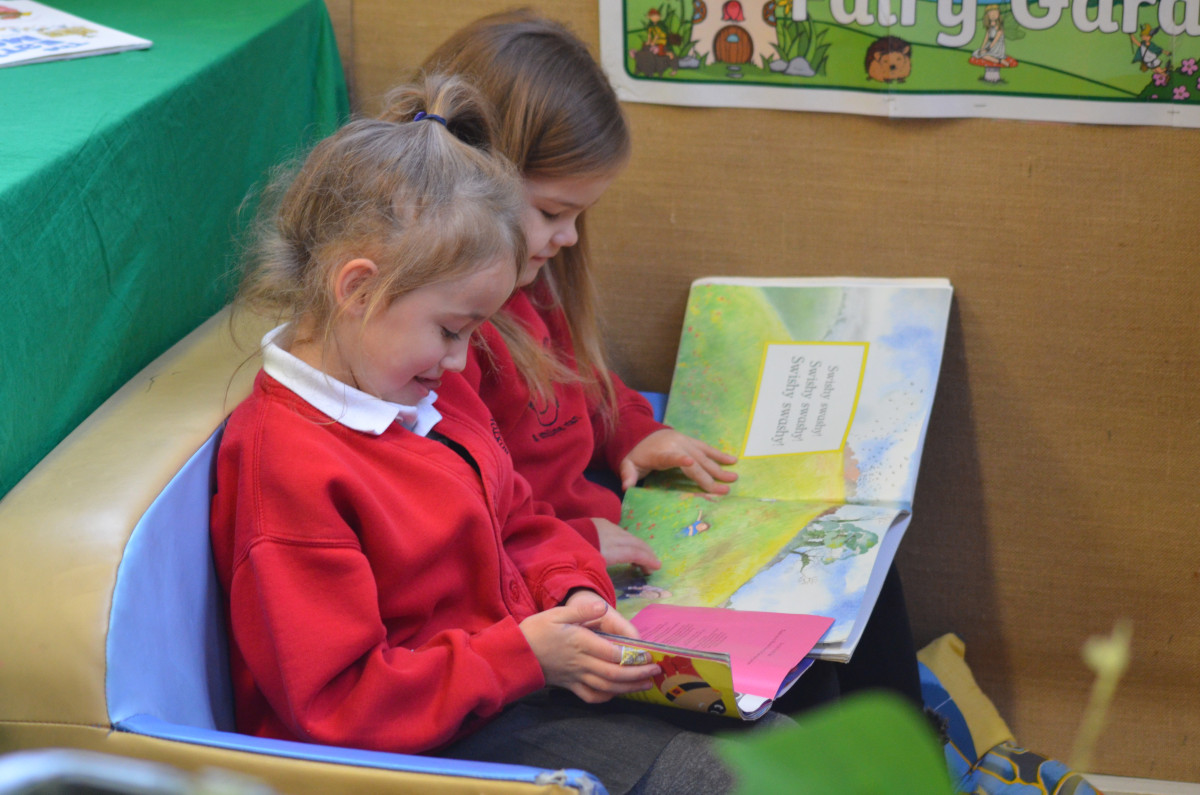
Each classroom has a dedicated reading area including a range of different texts, for example fiction and non-fiction books, poetry books and decodable texts. Children can access and choose books from their reading area at different points during the school day. Each book corner is different and children love reading on their own or with a friend in our lovely reading areas
Reading Together
Once a week each year group invites parents/carers to come into school at drop off with their child to share a book from the book corner together. This is a great chance for the children to listen to an adult reading to them and enjoy a book.
How to Help with Reading at Home
You can help at home by regularly sharing books with your child, especially by reading the same one over and over again or by asking them to tell you about the treasured books they have read in school: Which ones are their favourites? Can they tell you what happens in the story? Would they like to read another book by the same author? What interesting words has the author used? Do they know the meanings of them?